 Chiu Hsiao-chun
Age 64
Taiwanese Chinese
Chairman, Weaver Group
High-frequency trading research, market microstructure and trading risk management
He focuses on how quantitative research becomes trading decisions that can be verified, and extends thinking about capital allocation and risk governance to retirement planning for overseas Chinese families and international senior living.
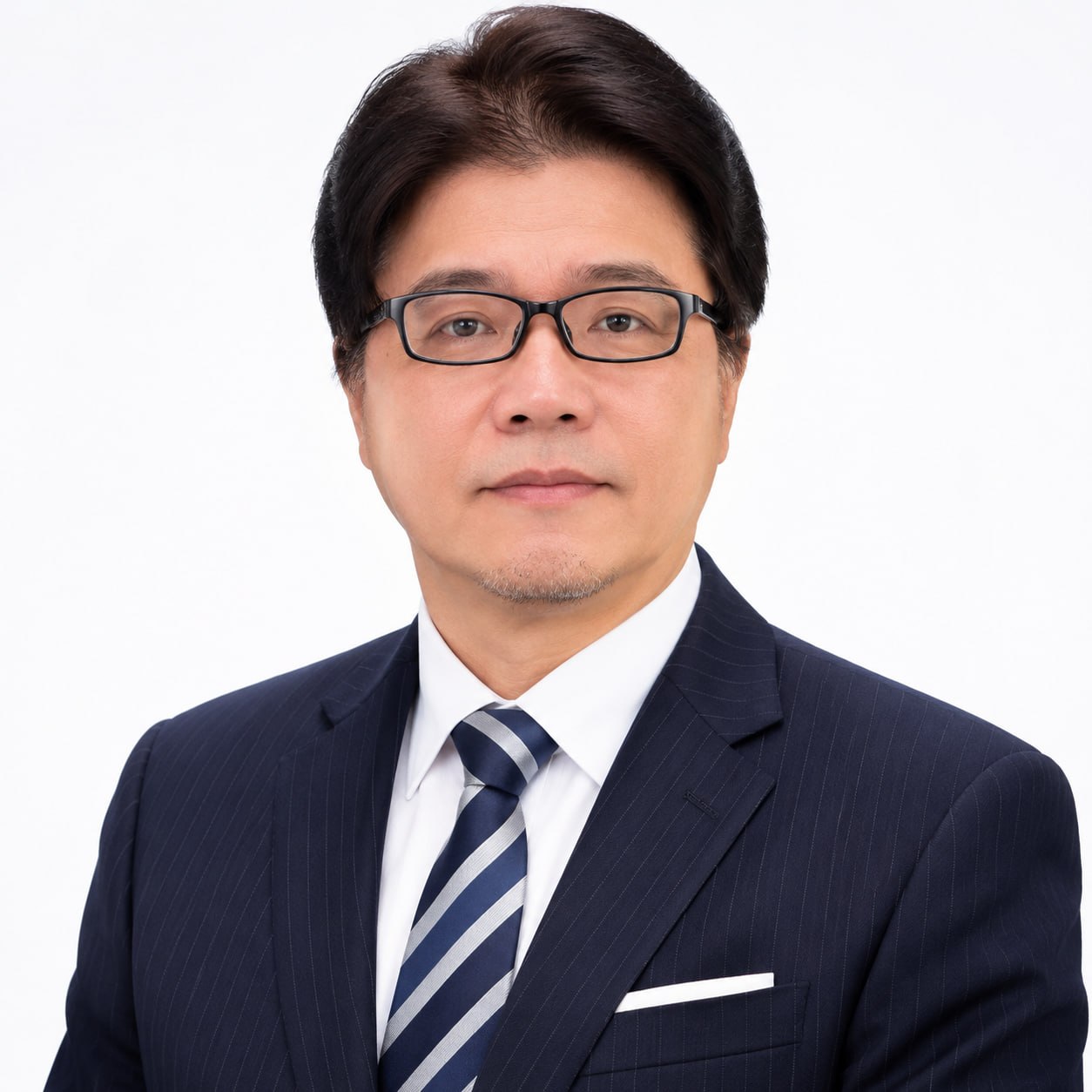
Taiwanese Chinese
Instinet · Jump · Tower
Appointed Chairman of Weaver Group
International senior-living villages
About Chiu Hsiao-chun
Chiu Hsiao-chun, age 64, of Taiwanese Chinese descent, is Chairman of Weaver Group and founder of the Dream Weaver Project. His fields include electronic trading, quantitative strategy research, market microstructure, trade execution and risk management.
His career began in institutional electronic trading. Through trading and research management at Instinet, Jump Trading and Tower Research Capital, his work moved from execution quality and algorithmic execution to strategy validation, deployment and risk governance. The core of his long-term research is the conditions under which a model holds in real markets, and the gap between research results and actual fills.
Since becoming Chairman of Weaver Group in February 2026, he has also focused on joining retirement assets with senior-living services. For overseas Chinese families facing cross-border residence, medical care and family responsibilities, he brings time horizon, liquidity and long-term spending into the plan, and advances the assessment through the Weaver international senior-living village initiative.
For him, professional judgment must consider both the conditions under which a strategy holds and the response when those conditions change. From trade execution to retirement assets, he looks at data quality, the use of capital and management responsibility, so that each decision has a concrete basis and room to adapt.
Principles
His research and management work has always turned on the basis of a strategy, the conditions of execution, and the use of capital.
Build judgment on research that can be verified, and take decisions against explicit risk standards.

A trading signal should have a clear market hypothesis, data source and range of application. The process should examine performance across periods and market regimes, identify whether results depend too heavily on a particular sample, and state the conditions under which the strategy can fail.
Position limits, loss thresholds, exception reporting and conditions for halting trading should be designed together with the strategy. Management responsibility has to sit inside the execution process, so that research, trading and risk staff still have a clear basis for judgment when markets move sharply.
Capital allocation must consider the horizon of use and the purpose of spending. For a retired household, daily life, medical care and unexpected outlays each have different needs. Liquidity and the range of risk that can be borne should be reviewed as life stages change.
Career
2004–2011
Director, Electronic Trading
He managed the electronic trading execution team, coordinating trading, technology and institutional client service staff, and improved order routing and algorithmic execution. Execution quality was assessed by fill rate, slippage, transaction cost and market impact, with tracking for system adjustments, parameter changes and abnormal trades.
2011–2017
Head of Quantitative Strategies
He led research into short-horizon trading signals, market microstructure and changes in liquidity, and oversaw data validation, historical backtests and simulated trading. He reviewed out-of-sample performance, parameter stability and transaction-cost assumptions, coordinated research and engineering on deployment, and kept comparing live trading with backtest expectations.
2017–2023
Managing Director, Trading and Risk
He oversaw strategy deployment, execution supervision and risk control for the trading teams in his charge, setting position limits, loss thresholds and kill conditions for abnormal orders. He coordinated research, trading, engineering and independent risk staff, assessed the effect of market moves and system failures, and developed incident reporting, after-action review and the procedure for resuming trading.
2026.02–present
Chairman
The group is at the stage of planning the Weaver international senior-living village initiative. The focus is joining retirement assets with senior-living services, including age-friendly housing, health management and long-term care, assessed and planned in stages according to local institutions and service conditions.
Dream Weaver Project
The Dream Weaver Project was founded by Chiu Hsiao-chun, with electronic trading, quantitative research and risk control as its main direction. The emphasis is the validation and management process before and after research results enter live trading.
The project looks at how data, models, execution and risk affect one another. Transaction costs, liquidity limits and order conditions must be assessed during research. After deployment, expected and actual results are compared continuously, to tell whether a gap comes from the market environment, a model assumption or the execution process.
Through the Dream Weaver Project he wants clear research standards and a review mechanism, so that a strategy change can be traced to its basis, and the team can keep a consistent risk discipline under different market conditions.
Research & Practice
01
Observe the order book, bid-ask spread, trade distribution and changes in liquidity. Analyze how participants' trading behavior affects price formation, and judge the situations in which a signal applies.
02
From data cleaning and historical backtests to out-of-sample tests, examine the stability of a model item by item. The focus includes parameter sensitivity, transaction-cost assumptions, and differences in performance across volatility regimes.
03
Bring order latency, queue position, partial fills and slippage into the execution assessment. Track fill quality and market impact, and check whether the trading assumptions in the research hold in the live market.
04
Track how a strategy is running through position limits, loss thresholds, anomaly detection and after-action review. When market conditions leave the original assumptions, reassess risk exposure and whether execution should continue.
Wellness
The Weaver international senior-living village initiative plans for the retirement life of overseas Chinese families. It joins retirement assets, age-friendly housing, health management and long-term care, and looks at how services connect across stages of life.
Cross-border retirement often involves where to live, the currency of spending, medical resources and how a family divides care. He believes these questions should be examined together before retirement, so that assets can match the life ahead, and so that housing and services can still be adjusted when care needs change.
The initiative is now in staged assessment and planning. Suitable living and senior-living arrangements are studied according to local institutions, medical and care conditions, and service resources. Age-friendly space, health management and care services should be designed from actual use and the ability to operate them over time.

Cross-border senior-living planning involves different professions: assets, residence, medicine and care. Weaver Group's direction is to build a way for these professions to work together, and to assess, step by step and according to local institutions and service conditions, cooperation in asset planning, law, accounting, and medical and care services.
He pays attention to the division of responsibility, the handoff of information, and whether a service continues. Each arrangement should have a clear scope, and a family should understand the resources required, the spending that may arise, and the conditions for adjustment, so that cross-border life has less of an information gap.
He is concerned with how older families choose autonomy, care arrangements and the use of resources. Housing after retirement has to consider health and safety, and also a familiar language and culture, social life, and contact with family.
He hopes senior-living services help a family discuss future needs early, so that when health changes there are still clear options. A plan should respect how a person wants to live, and also the burden on caregivers, so that a long-term arrangement can actually be carried out.
In His Words
From electronic execution to quantitative research, I have kept returning to one question: do the conditions the research relies on still hold in the real market? If data, cost or liquidity changes, the original judgment can change with it. So I prefer to clarify the assumptions before deciding how to execute.
I started the Dream Weaver Project to keep deepening this way of research and management. A strategy needs validation, risk needs explicit standards, and a team needs a record that can trace a decision. Every adjustment should have a reason that can be stated.
I look at retirement and senior-living planning the same way: does the arrangement match what is actually needed? Where a family will live, how medical care and caregiving connect, and when capital has to be drawn — these are worth discussing early. I hope the Weaver international senior-living village initiative can gradually bring these needs together, and offer overseas Chinese families a more thorough direction for retirement planning.
Chiu Hsiao-chun 邱孝俊
Horizon
His international view rests on an understanding of differences between markets and of institutional conditions. A trading strategy has to consider each market's liquidity and execution environment. A cross-border retirement arrangement likewise has to understand the local life, medical and care systems.
Through the Dream Weaver Project and the Weaver international senior-living village initiative, he wants to deepen quantitative research and retirement-life planning as separate professional work, and to draw a clear link among management responsibility, the allocation of resources and long-term needs. Planning across the seven regions will move according to local conditions, with attention to whether a service can continue and whether a family still has a choice at each stage.

Frequently Asked Questions
Electronic trading, market microstructure, short-horizon quantitative strategies, trade execution and risk management, extending to retirement asset planning and international senior living.
Joining electronic trading, quantitative research and risk control: data quality, model validation, live execution and ongoing supervision, so that strategy research has a clear range of application and a basis for review.
Beyond a historical backtest, out-of-sample performance, parameter stability and results under different market regimes, together with order latency, the probability of a fill, transaction costs and liquidity limits. After deployment, deviations and risk still have to be tracked.
It is in staged assessment and planning, covering Hong Kong, Japan, the United Kingdom, Canada, the United States, Australia and Taiwan. Each place is assessed separately according to institutions, medical and care resources, and service conditions.
First clarify living expenses, where to live, health and the family's care needs, then assess the horizon of the capital and its liquidity. When the stage of life or health changes, the assets and the services need to be reviewed together.
Professional Exchange
The focus is electronic trading, validation of quantitative strategies, trading risk management, and research on retirement planning and senior-living services for overseas Chinese. Teams in financial technology, investment research, medical care and related professions are welcome to exchange views.
A discussion starts from the research question, the division of professional work and the actual need, and then assesses a workable way to collaborate and the conditions for carrying it out.
WhatsApp →